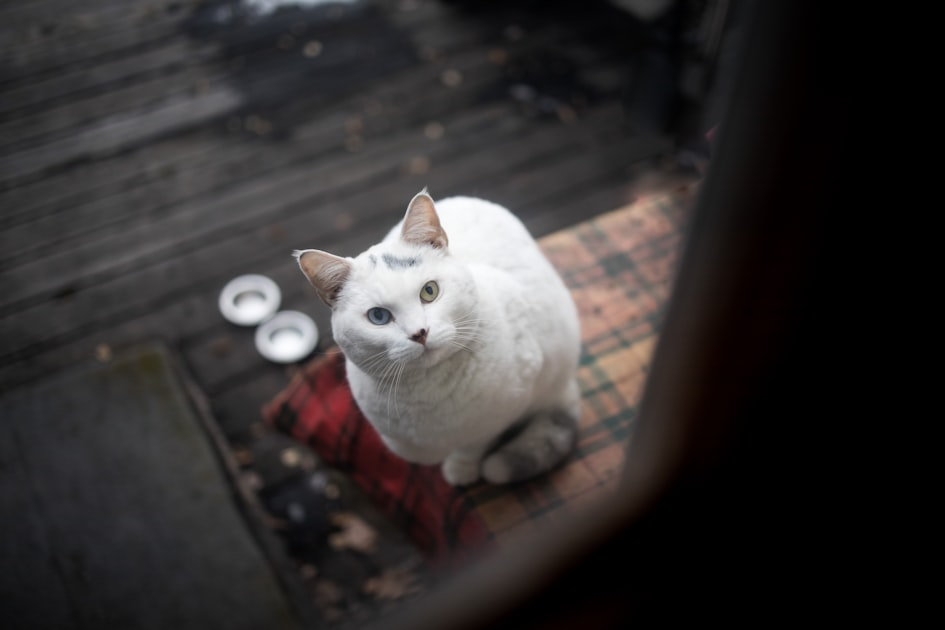
You notice a patch of thin fur on your cat’s belly. Then you see another on her inner thigh. The fur isn’t falling out in clumps, but these areas are progressively losing hair. When you watch her, you realize she’s constantly licking and grooming these spots. The skin underneath looks normal, not red or irritated, but the obsessive licking continues. Now you have a cat with visible bald patches from overgrooming.
Excessive grooming, medically called psychogenic alopecia when stress-related or simply overgrooming when from any cause, means your cat is licking, chewing, or pulling out her own fur beyond normal grooming needs. The result is hair loss, typically in areas the cat can easily reach with her tongue: belly, inner thighs, flanks, and front legs.
The two most common causes of overgrooming are stress or anxiety and flea allergy dermatitis. Both drive the same compulsive licking behavior but require completely different treatments. Stress-induced overgrooming needs behavioral intervention and anxiety management. Flea allergy requires aggressive flea control and treating the allergic response. Distinguishing between these causes (and recognizing when both exist simultaneously) determines whether treatment succeeds or fails.
The challenge is that cats are secretive groomers. Many owners never see the excessive grooming happening because cats groom more when alone or at night. By the time bald spots appear, the behavior has been ongoing for weeks or longer. Understanding what drives overgrooming, recognizing the patterns associated with each cause, and knowing how to address both medical and behavioral factors helps restore your cat’s coat and comfort.
This guide explains how to distinguish stress-related from flea-related overgrooming, what other conditions cause similar hair loss, how veterinarians diagnose the cause, what treatments work for each scenario, and how to prevent recurrence.
Understanding Normal Grooming
Before identifying excessive grooming, it helps to understand normal feline grooming behavior.
Normal Grooming Patterns
Frequency: Cats spend 30% to 50% of their waking hours grooming. This is a significant portion of the day and completely normal.
Purposes:
- Cleaning fur and removing dirt
- Distributing skin oils
- Regulating body temperature
- Removing loose hair
- Social bonding (grooming other cats)
- Stress relief (mild, normal amounts)
- Marking with scent glands
Appearance: Normal grooming doesn’t cause hair loss or create visible bald spots. The coat remains full and even.
Behavior: Grooming sessions are focused but not frantic. Cats groom systematically, moving across their body in organized patterns.
Excessive Grooming
Characteristics:
- Grooming the same spots repeatedly
- Grooming to the point of creating bald patches
- Obsessive or compulsive quality
- Doesn’t stop when interrupted
- Resumes immediately after being redirected
- Often focused on specific body areas
- Creates visible hair loss
Result: Noticeable bald spots or thinning fur in areas the cat can reach with her tongue.
Flea Allergy Dermatitis
Flea allergy is the most common medical cause of overgrooming in cats.
What Flea Allergy Is
Flea allergy dermatitis (FAD) means your cat is allergic to flea saliva. When a flea bites, it injects saliva into the skin. In allergic cats, this triggers an intense immune response creating severe itching.
Important fact: A single flea bite can cause intense itching lasting weeks in an allergic cat. You don’t need a heavy flea infestation for allergic cats to suffer. Just one or two fleas create serious problems.
How Flea Allergy Causes Overgrooming
Intense itching: The allergic reaction creates overwhelming itchiness. Your cat licks and chews frantically trying to relieve the sensation.
Can’t stop: Even after the flea is gone, the allergic reaction continues. Your cat keeps grooming the itchy areas obsessively.
Secondary behaviors: The constant discomfort creates stress and anxiety, which can perpetuate grooming even after fleas are controlled.
Typical Pattern of Flea Allergy
Location of hair loss:
- Base of tail and lower back (most common)
- Hindquarters and back legs
- Belly
- Inside back legs
Distribution: Often affects the back half of the body more than the front, though generalized patterns can occur.
Appearance:
- Stubble feel (hair broken off from grooming)
- Small scabs or bumps (miliary dermatitis)
- Sometimes redness or irritation
- Skin may look normal between scabs
Other signs:
- Restlessness
- Frequent scratching
- Tail chasing or biting
- Rippling skin on the back
- Visible fleas or flea dirt (though often not visible in allergic cats who groom excessively)
Finding Evidence of Fleas
Flea dirt: Black specks in the fur that turn red when moistened (digested blood from flea feces). Use a flea comb or check bedding.
Adult fleas: Quick-moving small brown insects. Allergic cats often groom fleas off immediately, so you might not see them even when present.
Flea comb test: Run a fine-toothed flea comb through your cat’s fur, especially over the back and base of tail. Look for fleas or flea dirt.
Absence doesn’t rule out fleas: Not seeing fleas doesn’t mean they’re not the problem. Allergic cats groom so effectively that evidence is often removed.
Risk Factors
Indoor-outdoor cats: Higher flea exposure.
Multi-pet households: Fleas spread between animals. Dogs can bring fleas inside even if cats are indoor-only.
Warm climates: Year-round flea seasons.
Summer and fall: Peak flea seasons in temperate climates.
Previous flea allergy: Once a cat develops flea allergy, it typically persists for life.
Stress-Induced Overgrooming (Psychogenic Alopecia)
Stress and anxiety can drive compulsive grooming behavior resulting in hair loss.
What Psychogenic Alopecia Is
When cats experience chronic stress or anxiety, they sometimes develop compulsive behaviors including excessive grooming. The grooming provides temporary stress relief, reinforcing the behavior and creating a cycle.
Important distinction: This is a real medical condition, not “behavioral” in the sense of your cat being bad or spiteful. The stress creates genuine psychological distress manifesting as compulsive behavior.
How Stress Causes Overgrooming
Displacement behavior: When cats can’t resolve a stressful situation, they redirect that anxiety into grooming. What starts as stress relief becomes compulsive.
Self-soothing: Grooming releases endorphins that feel calming. Stressed cats learn that grooming reduces anxiety temporarily, leading to increased grooming.
Obsessive-compulsive disorder: In severe cases, this progresses to true OCD where the cat can’t stop the behavior even when the original stressor is gone.
Common Stressors
Environmental changes:
- Moving to a new home
- Renovations or construction
- Furniture rearrangement
- Changes in household routine
Social stress:
- New pets (cats, dogs, or other animals)
- Loss of companion animal
- New baby or family member
- Visitors or house guests
- Conflict with other household cats
Owner-related stress:
- Changes in owner schedule (new job, different hours)
- Owner absence (vacation, hospitalization)
- Change in attention levels
- Owner stress (cats pick up on this)
Medical stressors:
- Pain from other conditions
- Illness creating discomfort
- Previous frightening veterinary experiences
Chronic vs. acute stress: Both can trigger overgrooming. Sometimes a single traumatic event starts the behavior. Other times, chronic low-level stress accumulates until overgrooming develops.
Typical Pattern of Stress-Induced Overgrooming
Location of hair loss:
- Belly (most common)
- Inner thighs
- Front legs (accessible while sitting)
- Flanks
Distribution: Often symmetrical. Both sides of the body affected equally. Affects areas the cat can comfortably reach while sitting or lying down.
Appearance:
- Very neat, even hair loss
- Skin looks completely normal (not red, no bumps, no irritation)
- Stubble feel (hair broken off from licking)
- No secondary skin problems
Other signs:
- Anxiety or nervous behavior
- Hiding more than usual
- Reduced appetite
- Sleep disturbances
- Increased vocalization
- Changes in litter box habits
- Sometimes other compulsive behaviors (pacing, excessive meowing)
Breed Predisposition
Some breeds show higher rates of stress-induced overgrooming:
- Siamese
- Burmese
- Abyssinian
- Himalayan
However, any cat can develop this condition.
Personality Factors
Cats more prone:
- Naturally anxious personalities
- Those who’ve always been nervous or easily stressed
- Cats with previous trauma or difficult early life experiences
- Those who are very bonded to one person
Distinguishing Fleas from Stress
Several clues help differentiate these two common causes.
Location Patterns
Favors flea allergy:
- Base of tail and lower back prominently affected
- Back half of body more than front
- Outside back legs
Favors stress:
- Belly most prominent
- Inner thighs
- Front legs
- Symmetrical pattern
Either could cause:
- Generalized hair loss
- Multiple body areas affected
Skin Appearance
Favors flea allergy:
- Small scabs or bumps (miliary dermatitis)
- Redness or inflammation
- Irritation visible on skin
- Flea dirt present
Favors stress:
- Completely normal-looking skin
- No redness, bumps, or irritation
- Very neat, clean appearance to bald areas
Evidence of Fleas
If you find fleas or flea dirt: This doesn’t automatically mean stress isn’t also involved, but it confirms fleas are part of the problem.
If you find no evidence: Doesn’t rule out fleas (cats groom them off) but makes stress more likely if no other signs exist.
Seasonal Patterns
Favors flea allergy: Worsens in summer and fall (flea season in most areas).
Favors stress: Coincides with specific stressful events or changes in household. No seasonal pattern.
Response to Flea Treatment
Trial flea prevention: Aggressive flea control for 6 to 8 weeks can be diagnostic. If overgrooming resolves, fleas were the cause. If no improvement, stress or other causes are more likely.
History and Context
Favors flea allergy:
- Outdoor access
- Contact with other animals
- Lives in flea-endemic area
- Other pets showing similar symptoms
Favors stress:
- Recent household changes
- Known stressors present
- Anxious personality
- No flea exposure history
Other Causes of Hair Loss and Overgrooming
Not all overgrooming is from fleas or stress.
Food Allergies
True food allergies cause itching that drives grooming.
Pattern:
- Year-round symptoms
- Often affects face, ears, and neck as well as body
- Usually accompanied by gastrointestinal symptoms
- Diagnosed through elimination diet trials
Environmental Allergies (Atopy)
Allergies to environmental allergens like pollen, dust mites, or molds.
Pattern:
- May be seasonal
- Creates itching leading to grooming
- Often affects multiple body areas
- Sometimes accompanied by ear infections
Skin Infections
Bacterial or fungal skin infections cause itching.
Signs:
- Visible skin changes (redness, scaling, odor)
- Patches of infection rather than neat bald spots
- May have pustules or crusting
Parasites
Besides fleas, other parasites cause itching:
- Mites (several types)
- Lice (rare)
- Ringworm (fungal, not a parasite but causes hair loss)
Pain
Cats sometimes lick painful areas obsessively.
Causes:
- Arthritis
- Cystitis (causing belly licking)
- Abdominal pain
- Injury
Pattern:
- Focused on specific painful area
- Often one-sided if joint pain
- May show other pain behaviors
Hyperthyroidism
Overactive thyroid can cause behavior changes including increased grooming.
Signs:
- Weight loss despite good appetite
- Increased activity or restlessness
- Vomiting
- Increased thirst
- Occurs in older cats (over 8 years typically)
Neurological Issues
Rarely, nerve problems cause abnormal sensations leading to overgrooming specific areas.
Veterinary Diagnosis
Determining the cause requires systematic investigation.
History Taking
Your vet asks:
- When did hair loss start?
- How quickly has it progressed?
- Have you seen your cat grooming these areas?
- What’s your flea prevention routine?
- Any household changes or stressors?
- Indoor only or outdoor access?
- Other pets in the home?
- Diet and recent changes?
Physical Examination
Inspection:
- Pattern of hair loss
- Skin condition (normal, inflamed, infected)
- Presence of fleas or flea dirt
- Other skin lesions
Palpation: Checking for pain, masses, or other abnormalities under bald areas.
Flea Combing
Thorough combing looking for fleas or flea dirt even if none were found at home.
Skin Cytology
Tape preparations or skin scrapings examined under microscope checking for:
- Bacteria
- Yeast
- Mites
- Inflammatory cells
Fungal Culture
If ringworm is suspected, a culture is performed.
Food Trial
If food allergy is suspected, an 8 to 12 week elimination diet trial using novel protein or hydrolyzed protein food.
Bloodwork
Particularly in older cats, checking for:
- Hyperthyroidism
- Kidney or liver disease
- Other systemic problems
Flea Trial Treatment
Aggressive flea control for 6 to 8 weeks to see if symptoms resolve. Often diagnostic.
Diagnosis by Exclusion
Psychogenic alopecia is diagnosed by ruling out medical causes. If all tests are normal, skin looks healthy, and stressors are identified, stress-induced overgrooming is the diagnosis.
Treatment for Flea Allergy
Flea control is essential and must be aggressive and consistent.
Treating the Cat
Monthly preventatives:
- Selamectin (Revolution)
- Fluralaner (Bravecto)
- Imidacloprid + moxidectin (Advantage Multi)
- Other veterinary-recommended products
Important: Use only cat-safe products. Dog flea products containing permethrin are toxic to cats.
Consistency: Year-round prevention in most areas. Missing even one month allows reinfestation.
Treating Other Pets
All cats and dogs in the household need flea prevention, even if not showing symptoms.
Environmental Control
Vacuum thoroughly:
- Daily during treatment phase
- Dispose of vacuum bags immediately
- Vacuuming removes eggs, larvae, and pupae
Wash bedding: Hot water, weekly during treatment phase.
Consider environmental sprays: Veterinary-recommended products for severe infestations.
Treat outdoor areas: If cats have outdoor access, yard treatment may be necessary.
Addressing the Allergic Response
Steroids: Short-term use reduces itching and breaks the itch-scratch cycle.
- Oral prednisolone
- Injectable options
Anti-itch medications:
- Oclacitinib (Apoquel)
- Lokivetmab (Cytopoint injections)
Antibiotics: If secondary skin infections developed.
Timeline
Expect 6 to 8 weeks for full resolution. Fleas have multiple life stages and it takes time to eliminate all stages from the environment.
Treatment for Stress-Induced Overgrooming
Managing psychogenic alopecia is more complex and multifaceted.
Identify and Reduce Stressors
Assess environment:
- What has changed?
- What might be causing stress?
- Can stressors be removed or minimized?
Make changes:
- Remove or reduce identified stressors when possible
- Return to previous routines if changes caused stress
- Manage multi-cat household conflicts
Environmental Enrichment
Provide resources:
- Multiple litter boxes (one per cat plus one)
- Multiple feeding stations
- Various hiding spots and high perches
- Scratching posts and toys
Create predictability:
- Consistent daily routines
- Regular feeding times
- Dedicated play sessions
Reduce competition: In multi-cat homes, ensure all cats have access to resources without conflict.
Pheromone Therapy
Feliway: Synthetic feline facial pheromone creates calming effect.
- Plug-in diffusers throughout home
- Spray on furniture or bedding
- Takes several weeks to show effects
Behavior Modification
Distraction:
- Redirect to play when you see grooming starting
- Interactive toys
- Food puzzles
- Training sessions
Positive reinforcement:
- Reward calm, non-grooming behavior
- Provide attention during non-grooming times
- Don’t reinforce grooming by immediately giving attention
Anti-Anxiety Medications
When environmental management alone doesn’t work.
Fluoxetine (Prozac):
- Most commonly prescribed
- Daily medication
- Takes 4 to 6 weeks to see full effects
- Long-term use often necessary
Other options:
- Clomipramine
- Buspirone
- Gabapentin (particularly if anxiety is situational)
Important: Medication works best combined with environmental management, not as sole treatment.
Elizabethan Collar
Short-term use: E-collar prevents grooming, allowing fur to regrow. However, this doesn’t address the underlying cause and behavior typically resumes when collar is removed.
When helpful: Breaking the habit while implementing other treatments.
Physical Barriers
Clothing: Cat shirts or suits cover areas and prevent access. Some cats tolerate these better than e-collars.
Treatment for Both
Many cats have both flea allergy and stress-induced components.
Comprehensive approach:
- Aggressive flea control
- Stress reduction
- Environmental enrichment
- Sometimes anti-anxiety medication
Why both exist: Flea allergy creates stress, which perpetuates grooming even after fleas are controlled. Or, a stressed cat is more reactive to flea bites.
Monitoring Progress
Track improvement over weeks to months.
What to Watch
Positive signs:
- Fur regrowing in bald areas
- Reduced grooming frequency
- More relaxed behavior
- Better sleep
- Increased play or activity
Lack of improvement:
- No fur regrowth after 8 to 12 weeks of treatment
- Continued or worsening hair loss
- Development of new bald spots
Timeline Expectations
Flea allergy: Improvement within 6 to 8 weeks of consistent flea control.
Stress-induced: Slower improvement. Environmental changes show effects in 4 to 8 weeks. Medications take 6 to 8 weeks for full effect. Fur regrowth takes months.
Be patient: Overgrooming that developed over weeks or months won’t resolve overnight.
Prevention
For Flea Allergy
Year-round prevention: Consistent flea control for all pets.
Environmental cleanliness: Regular vacuuming and washing bedding.
Prompt treatment: Address any flea exposure immediately before allergic response develops.
For Stress-Induced Grooming
Stable environment: Minimize unnecessary changes when possible.
Gradual transitions: When changes are necessary, introduce them gradually.
Adequate resources: Maintain appropriate number of litter boxes, feeding stations, and safe spaces.
Regular routine: Cats thrive on predictability.
Manage multi-cat conflicts: Address social stress promptly.
Early intervention: If you notice increased anxiety or early grooming changes, address them before they become compulsive.
Frequently Asked Questions
How can I tell if my cat is overgrooming or if the hair is just falling out?
Watch your cat carefully over several days. If you see her repeatedly licking, chewing, or pulling at the affected areas, especially obsessively or for extended periods, she’s overgrooming. Hair that falls out on its own due to medical problems (hormonal issues, poor nutrition) doesn’t involve excessive grooming behavior. The presence of stubble (broken hair shafts) rather than smooth bald skin also indicates overgrooming rather than hair falling out.
My indoor-only cat has bald spots. Can this really be from fleas?
Yes, absolutely. Indoor cats can get fleas from several sources: other pets that go outside, fleas hitchhiking in on humans’ clothing or belongings, or fleas entering through open doors or windows. Additionally, if your cat was adopted from a shelter or spent any time outdoors previously, flea allergy could have developed then and now reacts to even minimal exposure. Many indoor cats with flea allergy have no visible fleas because they groom them off immediately.
I’ve tried treating for fleas but my cat is still overgrooming. Does this mean it’s stress?
Not necessarily. First, ensure your flea treatment has been truly aggressive: treating ALL pets in the household, using veterinary-recommended products consistently for at least 8 weeks, and addressing the environment. Many “flea treatment failures” are actually incomplete treatment. If you’ve done all this correctly for 8+ weeks with absolutely no improvement, then stress or other causes become more likely. However, many cats have BOTH flea allergy and stress components requiring treatment of both.
Can psychogenic alopecia be cured or will my cat need medication forever?
This varies by individual cat. Some cats respond to environmental management alone and don’t need long-term medication. Others require ongoing medication to control compulsive behavior. Many cats can eventually be weaned off medication once the behavior improves and stressors are well-managed, but some need lifelong treatment. Think of it like human OCD: some people manage with therapy alone, others need medication long-term. Work with your vet to find the minimum treatment needed to keep your cat comfortable.
My cat only overgrooming her belly. Does the location tell me the cause?
Location provides clues but isn’t definitive. Belly is the most common site for stress-induced overgrooming but can also occur with flea allergy. Base of tail and lower back strongly suggest flea allergy but stress can affect these areas too. The location should be considered along with other factors: skin appearance, presence of fleas, timing of symptoms, household stressors, and response to treatment. Your vet uses all these pieces together to determine the most likely cause.
Will the hair grow back once the overgrooming stops?
Usually yes, but it takes time. Hair regrowth is slow, often taking 2 to 3 months before you see significant improvement. The follicles aren’t permanently damaged in most cases of overgrooming, so once the behavior stops, fur returns to normal. However, if overgrooming has been severe and prolonged (years), sometimes follicles are damaged and regrowth may be incomplete. Early treatment gives the best chance of complete fur regrowth.
Can I use an e-collar to stop the overgrooming while treating the underlying cause?
An e-collar can be used short-term to break the overgrooming habit and allow fur regrowth while addressing underlying causes. However, it shouldn’t be the only treatment. The collar doesn’t address why your cat is grooming excessively, and behavior often resumes when the collar is removed unless you’ve treated the root cause. Use the collar as part of comprehensive treatment, not instead of it. Additionally, e-collars create stress, which can worsen psychogenic alopecia if not carefully managed.
My vet says my cat’s overgrooming is stress but I haven’t changed anything. How can she be stressed?
Stress isn’t always obvious to owners. Stressors might include: subtle changes in routine you didn’t realize mattered, chronic low-level stress from multi-cat household dynamics, something frightening that happened outside your awareness, owner stress that your cat is picking up on, or even lack of adequate environmental enrichment creating boredom and anxiety. Sometimes the trigger isn’t current; a past event started the behavior which then became compulsive and self-perpetuating. Your vet can help identify potential stressors you might have missed.